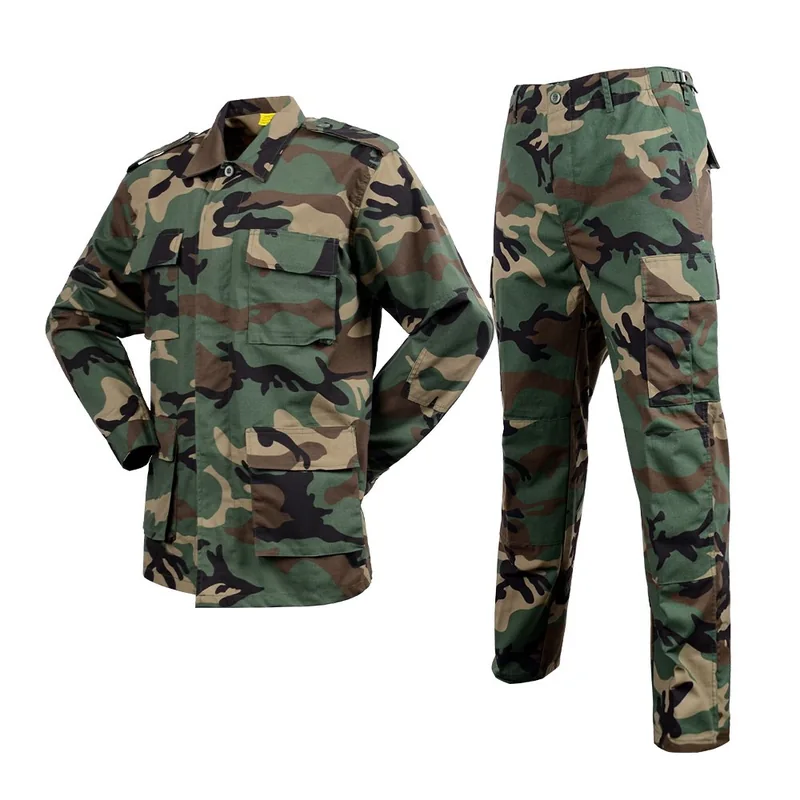
What Is a bdu uniform? Fabric, Features and Fit
A bdu uniform is a Battle Dress Uniform, typically comprising a shirt or jacket and trousers. BDU originally named a United States military field uniform; clothing sellers also use it for garments in that style. The label does not, by itself, specify one fabric, camouflage pattern, size chart or tested level of protection.
That distinction matters when two garments look similar. They may share a colour scheme and a familiar name while differing in fibre composition, pocket arrangement, measurements or included pieces. Understanding the clothing means separating those details, then reading each on its own terms.
What the BDU name tells you
BDU is an abbreviation with a specific expansion, Battle Dress Uniform. It also appears in descriptions of BDU-style clothing. A product carrying that name should therefore be understood through its actual garment description, rather than through assumptions about a historical uniform or current military issue.
The garment name and its camouflage describe different things. Camouflage describes the visible pattern; BDU describes the clothing designation. BDU-style garments can have different patterns or solid colours. A photograph of a familiar pattern does not establish the cut, fibre content or compliance of the garment underneath it.
It helps to divide a description into five parts:
| Information | What it describes | What remains separate |
|---|---|---|
| Garment name | The identified style or set | Exact construction and included pieces |
| Pattern or colour | The visible appearance | Fabric composition and specified colour reference |
| Fibre composition | The stated proportions of fibres | Weave, finishing and test results |
| Fabric weight | Material mass per unit area | Complete garment weight |
| Size | A label or stated dimensions | Measurement method and actual fit |
Keeping these categories separate prevents a short product description from appearing more complete than it is.
Read the fabric composition before interpreting its code
A fabric percentage tells you which fibres are stated to be present and in what proportions. It is one part of a textile specification. It cannot also tell you the pocket dimensions, garment measurements or results of a wash test.
For a concrete example, our BDU camouflage uniform set pairs 65% polyester and 35% cotton with the fabric code T65/C35. In that specification, the code and the percentages refer to the same blend. The code is useful shorthand because its meaning is supplied alongside it.
This does not make 65/35 the definition of BDU. Nor does it establish that every garment with a similar name uses that blend. Keep a fabric code attached to the description that explains it, especially when comparing documents that use different abbreviations.
Composition also leaves important textile questions unanswered. A percentage line does not identify the weave or explain whether a finish has been applied. Descriptions such as tear-resistant, water-resistant or shrink-resistant concern performance and need their own supporting information. Those properties should not be calculated or assumed from the blend ratio.
Understand what grams per square metre measures
Fabric weight expressed as grams per square metre, written g/m², means the mass of a given area of textile. It is not the weight of a shirt, trousers or complete set.
The same example uses 215–220 grams per square metre. A one-square-metre piece of fabric at that stated weight would weigh 215–220 grams. It does not mean that the completed jacket and trousers weigh that amount. Treating those numbers as interchangeable would confuse a material measurement with a finished-product measurement.
A garment contains a particular amount of fabric, along with features such as buttons, pocket layers and labels. The fabric's area-based weight alone does not supply the total mass of that garment. A set's finished weight needs a separate value tied to the actual pieces and size being measured.
When comparing two fabric weights, first check that the units and the item being described match. Then keep composition and construction in view. A larger g/m² number is a mass-per-area difference; it does not, on its own, prove a particular tear-strength result, washing behaviour or suitability for a given climate.
Construction details explain more than the overall photograph
Construction describes how the clothing is arranged and assembled. Pocket position, openings, cuff adjustment and additional fabric layers are useful details because they identify physical features that can be examined.
The example set describes button openings, front square pockets, shoulder tabs and cuff details. It also describes double-layer fabric at the knee and hip areas. These are specific construction statements, but they are not a complete technical drawing or a set of measured performance results.
A second fabric layer, for instance, identifies a layered area. It does not establish a certified protection level. Likewise, knowing that a pocket exists does not reveal its opening width, internal depth or closure dimensions. Each of those answers requires a more detailed description or a measurement.
Read the jacket and trousers separately before treating them as one set. A feature described for the upper garment cannot automatically be assigned to the trousers. Separate views and clearly identified pieces also make it easier to distinguish an included component from something merely shown beside the clothing.
Size labels and garment measurements answer different questions
A size label is a reference within a sizing system. It is not itself a complete measurement chart. The example's sequence, S, M, L, XL, 2XL and 3XL, does not supply chest, waist, sleeve or inseam dimensions.
Body measurements and garment measurements are also different. A body measurement describes the person. A garment measurement describes the clothing. A chart needs to make clear which it reports before its numbers can be used to understand fit.
The measuring method matters as well. A flat measurement across the waist and a measurement around the waist are different descriptions. Simply writing “waist” beside a number leaves the method unclear. Similarly, a sleeve measurement needs identifiable starting and ending points.
For a two-piece set, keep the upper and lower garment measurements together but separately identified. The same letter on both pieces does not supply missing dimensions or explain whether their fit corresponds to an individual's proportions. It also does not create an automatic conversion to another country's sizing system.
A practical way to read a complete description
Start with the named garment and identify whether the description covers a top, trousers or a set. Read the fabric composition and its code together. Keep any g/m² figure under fabric information, and any finished-item weight under the item it actually describes.
Next, separate visible construction from statements that need testing. Finally, read the measurement chart with its method, rather than relying only on a letter size or photograph.
This produces a clear record: garment identity, appearance, fabric, construction and measurements. Empty parts remain visible as missing information instead of being silently filled by the word BDU.
Common questions
What does BDU stand for?
BDU stands for Battle Dress Uniform. In a clothing description, the abbreviation alone does not establish current military authorization, one compulsory material or a tested performance standard.
Is every BDU made from the same fabric?
No universal fabric composition follows from the name. Use the composition stated for the particular garment. The 65% polyester and 35% cotton example here illustrates one documented specification, not every BDU-style product.
Does BDU mean camouflage?
BDU names the uniform family or style; camouflage describes a pattern. Keeping those terms separate helps explain what a bdu uniform actually is without confusing its appearance with its fabric, construction or fit.